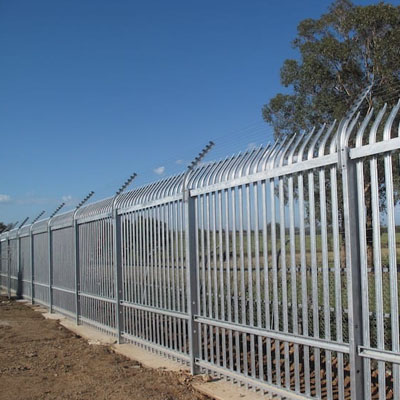
Why Palisade Fencing Is Used in High-Risk Sites

High-risk sites are not protected by fencing that simply defines a boundary. These environments require a barrier that actively resists intrusion, limits climbing, and remains effective under pressure from both use and external conditions. When security is treated as a requirement rather than an afterthought, fence selection becomes more focused on performance than appearance.

Palisade fencing is widely used in these situations because it addresses the common failure points seen in other fence types. Where mesh can be cut, solid panels can be climbed, and lighter systems can deform, palisade fencing maintains a rigid, difficult-to-scale barrier while preserving visibility along the perimeter. This combination makes it a practical choice for sites where consistent security performance is expected.
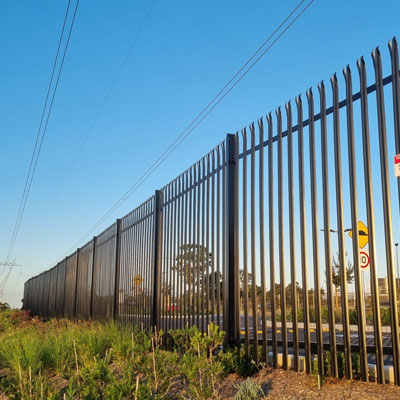
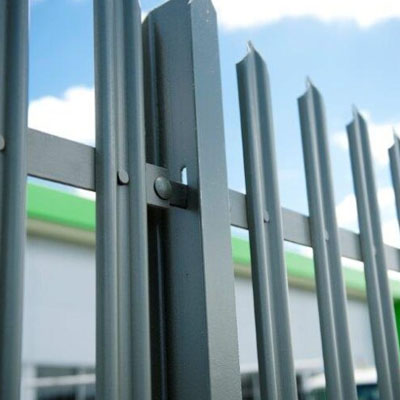
What Defines a High-Risk Site

High-risk sites are typically identified by the level of control required over access and the potential impact of unauthorised entry. These environments may involve valuable equipment, sensitive operations, or areas where safety risks are present. The perimeter is expected to manage these factors by limiting access and maintaining clear separation between internal activity and external areas.

The level of risk is also influenced by how the site is used. Locations with restricted access, high-value storage, or critical infrastructure place greater demands on fencing systems. In these cases, the boundary must perform consistently under varying conditions while supporting controlled entry points. This is where the choice of fencing becomes more closely tied to security requirements rather than appearance alone.

Physical Deterrence Requirements in High-Risk Environments

Fencing used in high-risk environments must do more than define a boundary. It needs to actively discourage intrusion by increasing the effort required to climb, cut, or force entry through the perimeter. This is where the physical design of the fence becomes critical, as small differences in profile and construction can significantly change how the barrier performs under pressure.

  • Limiting footholds, where vertical pale spacing reduces opportunities to gain leverage compared to systems with horizontal rails or mesh patterns.
  • Maintaining a rigid vertical profile, which makes climbing more difficult by removing continuous grip points across the fence face.
  • Resisting forced entry, with steel construction that holds shape under impact rather than bending or separating at connection points.
  • Providing consistent strength across the run, so there are no weaker sections that become the preferred point of entry.
Palisade Fencing Is Used in High-Risk Sites - physical deterrence

These features are the reason palisade fencing is widely used in higher security environments. Instead of relying on coverage alone, it increases the time and effort required to breach the boundary, which is a key factor in deterring intrusion attempts.

Visibility as a Security Advantage

Clear visibility is a key factor in how effectively a perimeter performs in high-risk environments. Fencing that allows sightlines through the boundary reduces areas where activity can go unnoticed and supports ongoing monitoring. This is particularly important on sites where surveillance, patrols, or passive observation play a role in security.

Palisade fencing maintains open visibility without compromising barrier strength. Its vertical design allows for clear lines of sight across the perimeter, which helps reduce concealment and supports quicker identification of movement near the boundary. This balance between openness and control contributes to a more effective and responsive security system.

Structural Strength and Impact Resistance

High-risk sites require fencing that can withstand more than everyday use. Perimeters are often exposed to attempted breaches, accidental vehicle contact, and ongoing operational stress. Under these conditions, fencing that relies on lighter materials or flexible systems can deform, loosen, or create weak points that reduce overall security.

  • Steel pale construction, which provides a rigid barrier that resists bending compared to lighter panel or mesh systems.
  • Resistance to deformation, where individual pales maintain shape under impact rather than flexing or collapsing across a larger section.
  • Secure fixing methods, which limit the risk of panels separating from posts under force or repeated stress.
  • Durability under repeated load, particularly in areas exposed to ongoing movement, vibration, or equipment interaction.

These characteristics are a key reason palisade fencing is used in high-risk environments. Instead of distributing force across a flexible surface, the structure maintains its integrity at the point of impact, which helps prevent localised damage from becoming a wider security failure.

Palisade Fencing Is Used in High-Risk Sites - structural strength

Access Control and Gate Integration

High-risk sites require access points that maintain the same level of security as the rest of the perimeter. Gates are often the most used and most tested part of the system, which makes their integration critical. Where gate design does not match the strength and structure of the fence, it quickly becomes the weakest point along the boundary.

Gate placement, size, and operation need to reflect how the site is used, particularly where vehicle access and controlled entry are required. Palisade fencing allows gates to be built with the same vertical pale structure, maintaining consistent strength, spacing, and resistance across the opening. This avoids the mismatch seen with some systems where the gate is effectively a different product to the fence.

By keeping the same profile and structural behaviour through both fence and gate sections, palisade systems reduce the likelihood of access points becoming a compromise point. The result is a perimeter that performs consistently, even in areas with the highest levels of use.

Consistency Across Large Perimeters

High-risk sites often involve long boundary runs where performance must remain consistent from one end of the perimeter to the other. On larger sites, small variations in strength, spacing, or alignment can create predictable weak points, especially where different sections have been installed at different times or under varying conditions.

  • Uniform pale spacing, which maintains a consistent barrier profile without irregular gaps that can be exploited.
  • Consistent height and structure, ensuring no section becomes easier to approach or scale than another.
  • Repeatable panel design, allowing extensions or repairs to match existing sections without introducing variation.
  • Even load distribution across posts and panels, reducing the risk of isolated movement or failure along long runs.
Palisade Fencing Is Used in High-Risk Sites - large perimeter

These factors are a key reason palisade fencing is used on large-scale and high-risk sites. Its modular, repeatable design allows the perimeter to be extended, repaired, or modified without creating inconsistencies that weaken overall performance. Over distance, this consistency becomes just as important as strength at any single point.

Talk to Northside Fencing About Palisade Fencing for High-Risk Sites

Selecting fencing for high-risk environments requires a balance between deterrence, visibility, and long-term durability. Contact Northside Fencing on (07) 3491 4100 or submit an enquiry through the website to discuss palisade fencing solutions across Brisbane, the Sunshine Coast, and the Moreton Bay region.

FAQ: Palisade Fencing & High Risk Sites

What makes palisade fencing suitable for high-risk sites?

Its vertical design limits footholds while maintaining visibility, which supports both deterrence and monitoring.

Is palisade fencing stronger than other fence types?

Palisade fencing is designed to provide a rigid steel barrier that resists bending and maintains alignment under load.

Can palisade fencing be used for large industrial sites?

Yes. It is commonly used across large perimeters where consistent spacing, height, and structural strength are required.

Do gates reduce the effectiveness of palisade fencing?

Gates can maintain the same level of security when they are correctly integrated and aligned with the fencing system.

Does palisade fencing require regular maintenance?

Routine checks help ensure fixings, alignment, and gate operation remain consistent over time.