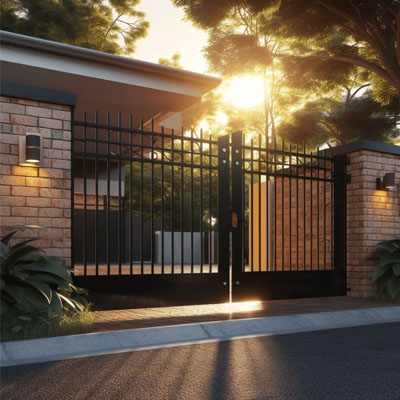
Swing or Sliding Driveway Gates: Choosing the Right Fit for Your Home

Driveway gates do more than secure a property. They shape how the entrance looks from the street, control access, and influence how easily cars move in and out each day. Choosing the right design affects everything from safety and convenience to the overall feel of the home’s frontage. Many Queensland homeowners upgrade to a driveway gate when improving privacy, modernising their exterior, or adding automated access for smoother daily use.

The first and most important decision is whether a swing gate or sliding gate suits the layout of the property. Both offer strong security and attractive design options, but they behave very differently once installed. The shape of the driveway, available space, slope, and how vehicles use the entrance will guide the choice. When these details are considered early, the gate will operate smoothly and complement the home for many years.

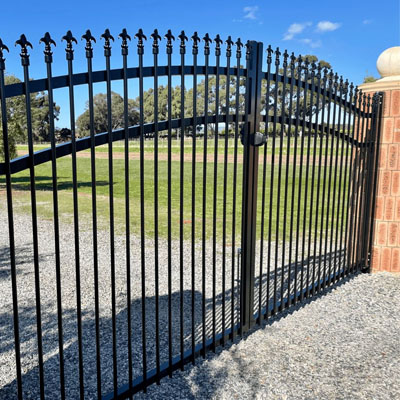
How Driveway Layout Shapes Gate Choice

The physical shape of the driveway determines how a gate needs to move. A straight, level driveway allows for more flexibility, while angled or rising entries limit the systems that will function reliably. Adequate space in front of and behind the entrance is essential, since gates require a clear path to open without hitting vehicles, garden beds, or retaining walls. When this space is tight, the mechanism must be chosen carefully to avoid daily frustration.

Turning circles and parking habits also influence the decision. If vehicles need extra room to angle into the garage or reverse out, the gate must not intrude on that space during opening or closing. Curved or narrow driveways often favour mechanisms that stay out of the way of wheel paths. Considering these layout details early makes the difference between a gate that feels effortless and one that disrupts movement every time the car leaves the property.

Swing or Sliding Driveway Gates: Choosing the Right Fit for Your Home

Swing Gates: Advantages and Best Use Cases

Swing gates remain a popular choice for residential driveways because they offer a classic look and smooth, quiet movement. They work best on straight, level driveways where the gate leaves can open freely without meeting obstacles. When designed well, they complement both modern and traditional homes, creating a clean and welcoming entrance.

  • Ideal for level driveways: Swing gates operate best when the driveway does not slope upward toward the house, since rising ground can obstruct the gate’s arc.
  • Suitable for wide entrances: Double-leaf designs distribute weight evenly and allow broader openings without overloading hinges.
  • Visually appealing: The traditional swing motion suits a wide range of architectural styles and contributes to strong street appeal.
  • Simple operation: Fewer moving parts make swing systems quiet and easy to maintain.
  • Requires clear opening space: The gate needs a defined area to swing inward or outward, which must remain free from parked vehicles, garden edging, and steps.
  • Consider wind exposure: Gates on open or elevated sites may experience wind pressure that affects smooth operation.
Swing or Sliding Driveway Gates: Choosing the Right Fit for Your Home

Swing gates work well when the block is mostly level and the entry has enough free space for the gate leaves to open safely. They suit homeowners who prioritise appearance and prefer a more traditional entry with minimal mechanical complexity.

Sliding Gates: Advantages and Best Use Cases

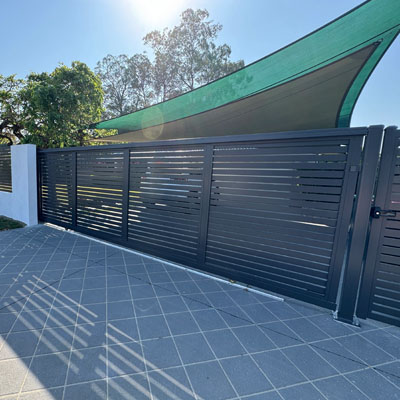
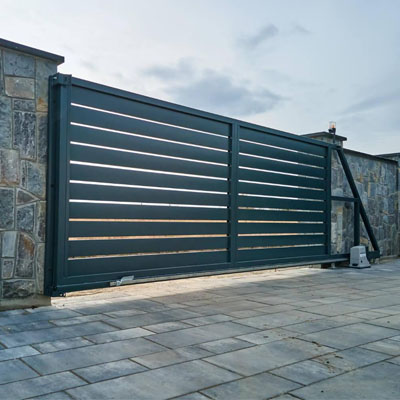
Sliding gates are often the best choice for properties where space or slope limits how a gate can move. Instead of swinging into the driveway, the gate travels sideways along the fence line, which keeps the entrance clear and usable at all times. This makes sliding systems especially practical for narrow blocks, short driveways, or homes where cars need maximum turning space to reach the garage.

  • Works well on sloped driveways: Sliding gates operate smoothly even when the driveway rises sharply, since the gate does not need to follow the ground contour.
  • Ideal for narrow or space-restricted blocks: With no swing arc, vehicles can park closer to the entrance, and gardens or retaining walls near the boundary are not an issue.
  • Stable in windy conditions: The lateral movement and guided track help the gate resist wind pressure, which improves performance on exposed or elevated properties.
  • Suitable for large or heavy designs: Wider openings and denser materials are easier to manage with a sliding mechanism, making these gates ideal for wider frontages.
  • Clean, modern appearance: Sliding systems pair well with aluminium slats, Colorbond panels, and contemporary architectural styles.
  • Requires lateral clearance: The gate needs a clear run along the boundary, which must remain free from bins, air-conditioning units, shrubs, and meter boxes.
Swing or Sliding Driveway Gates: Choosing the Right Fit for Your Home

Sliding gates are a strong option when space is limited or the driveway slope prevents a swing system from working reliably. They offer smooth operation, modern styling, and excellent practicality for everyday vehicle movements.

Automation Options for Both Gate Types

Automation enhances both swing and sliding gates by improving convenience, safety, and day-to-day usability. Modern systems use reliable motors, safety sensors, and remote access features that make entering and leaving the property smoother and more secure. The right setup depends on the weight of the gate, the available power supply, and how often the gate will be used each day. Planning these details early ensures the system runs efficiently without straining components.

Swing gates typically use articulated arm or linear motors, each suited to different leaf sizes and hinge placements. Sliding gates rely on a track or cantilever system with a drive motor that moves the gate along the boundary. Both systems can include soft-start functions, automatic closing timers, obstacle detection, and manual release options for power outages. Good automation makes a driveway gate feel seamless, safe, and easy to operate, whether you are coming home late at night or leaving during busy morning traffic.

Swing or Sliding Driveway Gates: Choosing the Right Fit for Your Home

Material Choices That Improve Performance and Style

The material used for a driveway gate affects durability, appearance, and how smoothly the system works once automated. Choosing the right combination for Queensland conditions helps the gate resist corrosion, stay aligned, and maintain its finish over time.

  • Aluminium slats offer a lightweight and low-maintenance option that works well for both swing and sliding gates. They hold colour, allow airflow, and suit modern architectural styles.
  • Colorbond panels provide full privacy and a clean, uniform look. They handle Queensland weather well and slide smoothly when paired with a strong steel frame.
  • Steel framing gives structural strength for larger gates and helps the system stay true under frequent use. It pairs easily with aluminium, Colorbond, or screen infill.
  • Decorative aluminium screens create a premium look without adding heavy weight. They suit feature entrances and custom-designed façade themes.
  • Timber-look aluminium delivers the warmth of timber without the maintenance issues. It stays stable in sun-exposed areas and operates reliably with automation.
  • Tubular or mesh designs maintain visibility and airflow while keeping the structure light. They are ideal for homes prioritising openness rather than full privacy.
Swing or Sliding Driveway Gates: Choosing the Right Fit for Your Home

Choosing materials that match the home’s style, local conditions, and daily usage ensures the gate remains strong, quiet, and visually appealing long after installation.

What to Consider Before Making Your Final Choice

Choosing between a swing or sliding gate starts with how you use the driveway each day. Think about where vehicles park, how much room you need to turn, and whether cars ever stop right behind the gate line. If parking is tight or the driveway is short, keeping the opening area clear often makes a sliding gate more practical. On deeper blocks with plenty of space for the leaves to swing, a swing gate can work smoothly without interrupting vehicle movement.

Site conditions are just as important. Wind exposure, driveway slope, drainage, and nearby structures all influence how well each system performs over time. Gates on steep or rising driveways tend to operate more reliably on sliding tracks, while swing gates work best where the surface is flat and clear. Future plans such as adding automation, upgrading fencing, or installing front-yard landscaping should also be considered now, so the chosen gate continues to suit the property as it evolves.

Swing or Sliding Driveway Gates: Choosing the Right Fit for Your Home

Secure Access That Fits the Way You Live

Both swing and sliding driveway gates can provide strong security and a stylish entrance. The best choice comes down to how your driveway is shaped, how much space you have, and how you need vehicles to move every day. When these practical details guide the decision, the gate becomes a natural part of the home instead of a daily obstacle.

Northside Fencing designs and installs driveway gates tailored to Queensland properties. We help you choose the right mechanism, materials, and automation options so your entrance stays reliable and looks sharp for years. To discuss a swing or sliding gate for your home, call (07) 3491 4100 or get in touch with us online to arrange a quote and site assessment.

Swing or Sliding Driveway Gates: Choosing the Right Fit for Your Home

Frequently Asked Questions About Swing and Sliding Driveway Gates

Do sliding gates work better on sloped driveways?

Yes. Sliding gates move sideways, so they do not need to follow the driveway’s angle. This makes them more reliable than swing gates on steep or rising entries.

How much space does a sliding gate need?

A sliding gate must have enough clear boundary space for the full width of the gate to travel. This area should stay free from bins, plants, air-conditioning units, and meter boxes.

Can swing gates open outward toward the street?

Most councils prefer inward-opening gates to avoid blocking footpaths or driveways. Outward opening may be allowed on private roads or long setbacks but should be checked case by case.

Can both gate types be automated later?

Yes. Swing and sliding gates can be automated during installation or upgraded later, provided the frame, alignment, and power access are suitable for a motor system.

Which gate type is quieter?

Both systems can operate quietly when installed well, but swing gates generally have fewer moving components. Sliding gates stay quiet with regular track cleaning and correct roller alignment.

Are sliding gates more secure than swing gates?

Sliding gates are harder to force open due to the guided track and locked lateral movement. Both types offer strong security when paired with quality frames and sturdy locking hardware

What materials last longest for driveway gates in Queensland?

Steel frames with aluminium or Colorbond infill perform reliably in heat, moisture, and coastal air. They resist warping, corrosion, and fading better than untreated timber.

Do I need council approval to install a driveway gate?

Most standard residential gates fall within allowable height and placement rules. Properties with corner visibility requirements or unusual setbacks may need a quick compliance check before installation.