Slat Fencing for Pool Zones: What Actually Meets Compliance?

Slat fencing is a popular choice around pool areas because it offers privacy, airflow, and a modern appearance. Its visual appeal often leads property owners to assume it is suitable for use as a pool barrier. In practice, pool compliance is determined by measurable safety rules rather than style, and many slat fence designs fall short once spacing, height, and climbability are assessed. This gap between appearance and performance is a common source of failed pool inspections.

Pool safety rules apply equally to all fencing types, including slat systems. Inspectors assess how easily a fence can be climbed, whether gaps allow access, and how the design behaves as a physical barrier rather than a screen. Slat fencing can meet compliance requirements, but only when it is designed specifically for pool zones and installed with those rules in mind. Design choices that work well elsewhere on a property often require adjustment when used near a pool.
Where Slat Fencing Commonly Fails Pool Inspections

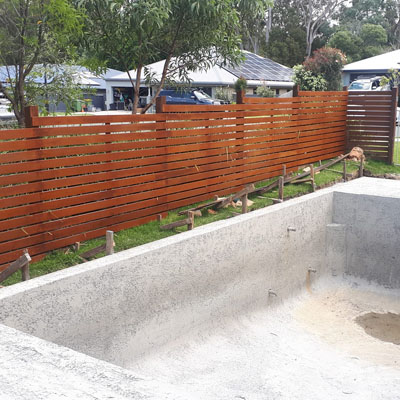
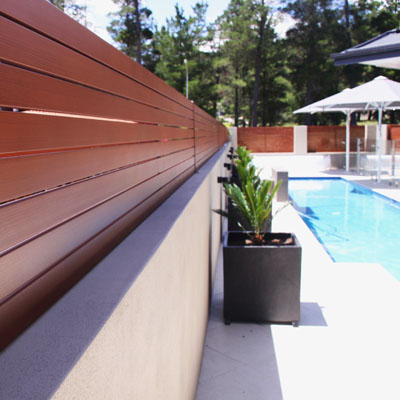
Pool inspections focus on how a barrier behaves when pressure is applied, not how it looks from a distance. Slat fencing is frequently flagged because its design can unintentionally create climbing paths, even when the fence appears solid. Repeated horizontal lines, visible rails, or stepped profiles can allow a child to gain purchase and move upward. These risks are assessed based on physical behaviour, not intention or appearance.

Another common issue is that slat fencing is often designed as a privacy screen rather than a safety barrier. Screens prioritise coverage and aesthetics, while pool barriers must prevent access under all conditions. Designs that work well along boundaries or outdoor living areas can fail when assessed against pool safety criteria. This mismatch is why slat fencing is closely examined during inspections and why many installations require modification before they can pass compliance checks.

Slat Fencing for Pool Zones: What Actually Meets Compliance?

Key Pool Compliance Rules Slat Fencing Must Meet

Slat fencing used around pool zones is assessed against the same safety rules as any other barrier. Compliance is based on fixed measurements and behaviour under use, as set out in AS 1926.1 and Queensland pool safety requirements, not on material choice or visual coverage.

  • Minimum fence height of 1200 mm, measured from finished ground level to the top of the barrier.
  • Maximum gap of 100 mm anywhere within or beneath the fence, including between slats and under panels.
  • A 900 mm non-climbable zone on the outside of the pool barrier, free of objects or design features that aid climbing.
  • Restrictions on horizontal elements, including rails or profiles that create footholds within the barrier.
  • Boundary fence rules, where fences used as pool barriers must reach 1800 mm in height on the pool side.
Slat Fencing for Pool Zones: What Actually Meets Compliance?

These rules apply regardless of whether the fence uses slats, panels, or other infill designs. When any one requirement is missed, the fence is likely to fail inspection even if it appears solid and well built.

Vertical vs Horizontal Slats in Pool Zones

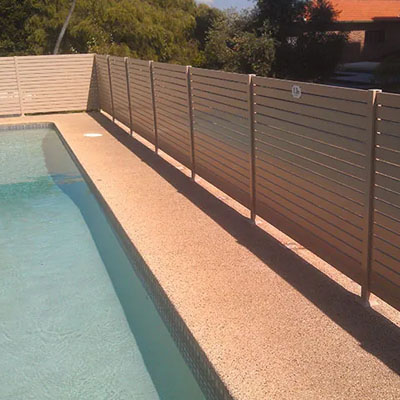
Slat orientation plays a major role in how a fence behaves as a safety barrier. Horizontal slats tend to create repeated ledges that can be used as footholds, even when spacing appears tight. When rails or fixings are visible, the fence can function like a ladder under physical testing. For this reason, horizontal slat designs are frequently flagged during pool inspections, as the climb risk comes from the layout itself rather than from poor installation.

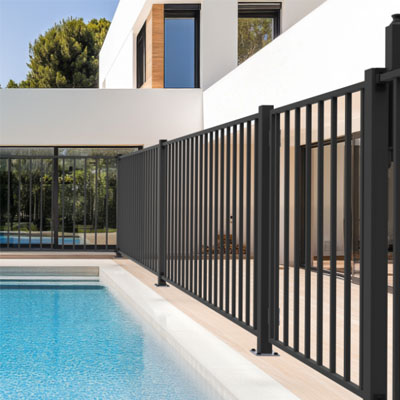
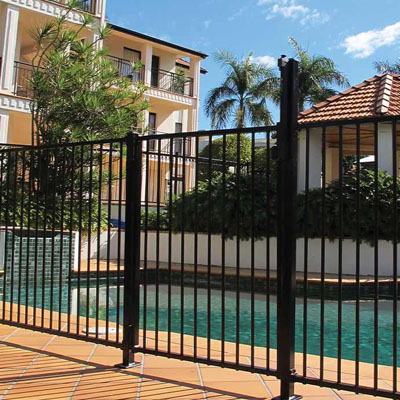
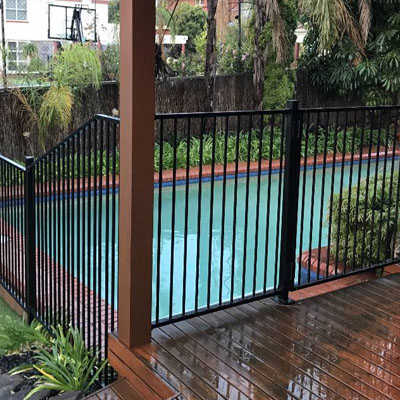
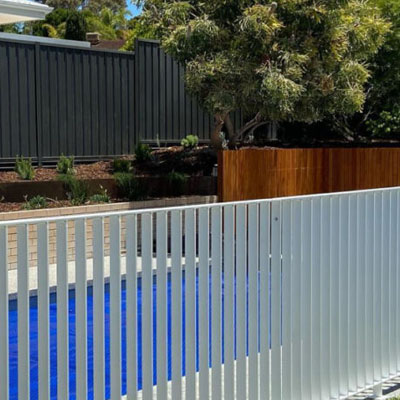
Vertical slat fencing behaves differently when designed correctly. With the slats running upright, the fence does not naturally provide a stepping pattern, which reduces climbability. Vertical designs are more likely to meet pool compliance requirements when spacing, rail placement, and overall height are controlled carefully. While vertical slats are not automatically compliant, their orientation allows them to function as a true barrier rather than a screen when built specifically for pool zones.

Slat Fencing for Pool Zones: What Actually Meets Compliance?

Spacing and Slat Profiles That Affect Compliance

Spacing and profile shape have a direct impact on whether slat fencing functions as a safety barrier or becomes climbable. Even when height and placement are correct, these design details are often where compliance is lost.

  • Slat spacing that exceeds allowable gaps, which can allow access through the fence or create footholds when combined with other elements.
  • Profiles with deep edges or returns, which can act as toe holds when pressure is applied.
  • Visible fixing points or brackets, especially where they align consistently across the fence line.
  • Rail placement that breaks the fence into steps, even when the rails are structurally sound.
  • Decorative slat shapes, where visual detail adds unintended grip or leverage.
Slat Fencing for Pool Zones: What Actually Meets Compliance?

These issues often arise when slat fencing is adapted from general screening designs rather than created for pool zones. Compliance relies on how the fence behaves under use, not how clean or solid it appears once installed.

Gates and Transitions Where Slat Fencing Often Fails

Pool gates are one of the most common failure points for slat fencing in pool zones. Problems often arise when a slat fence design is carried through to the gate without accounting for the extra movement and hardware involved. Hinges, latches, and closing mechanisms introduce gaps and alignment challenges that do not exist along fixed panels. When these elements are not designed specifically for pool compliance, the gate can fail even if the rest of the fence passes inspection.

Transitions between different fencing styles also require careful treatment. Slat fencing is often joined to solid panels, boundary fencing, or existing structures, and these junctions can create climbable edges or unintended gaps. Small offsets, exposed rails, or stepped height changes are closely examined during inspections. Compliance depends on the barrier functioning as a continuous system, and weaknesses at transition points can undermine an otherwise well-designed slat fence.

Slat Fencing for Pool Zones: What Actually Meets Compliance?

When Slat Fencing Can Work in Pool Zones

Slat fencing can meet pool compliance requirements when it is designed as a safety barrier rather than adapted from a screening system. These situations rely on purpose-led design choices that address climbability, spacing, and continuity from the outset.

  • Purpose-built slat systems designed for pool zones, where compliance requirements are built into the layout rather than adjusted after installation.
  • Vertical slat designs with controlled spacing, which reduce climb potential when combined with correct rail placement.
  • Concealed or carefully positioned rails, so horizontal elements do not form steps or handholds.
  • Clear non-climbable zones around the barrier, maintained throughout the fence line and around gates.
  • Consistent height and alignment across panels and transitions, ensuring the barrier performs as a single system.
Slat Fencing for Pool Zones: What Actually Meets Compliance?

When these conditions are met, slat fencing can function effectively as a pool barrier. Compliance depends on how the fence behaves under inspection rather than how closely it resembles other fencing styles used elsewhere on the property.

How We Design Slat Fencing to Meet Pool Compliance

We approach slat fencing near pool zones with compliance built into the design stage rather than treated as an adjustment later. Measurements are confirmed before materials are selected, and layouts are planned to control climbability, spacing, and continuity along the entire barrier. This allows the fence to function as a safety system rather than a decorative screen. Each design decision is made with inspection behaviour in mind so the barrier performs as expected when assessed.

We also pay close attention to how slat fencing interacts with gates, boundary fencing, and surrounding structures. Transitions are detailed carefully to avoid gaps or step points, and hardware placement is selected to maintain consistent performance across moving and fixed sections. By treating the fence as a complete barrier rather than a collection of panels, slat fencing can be integrated into pool zones without compromising compliance.

Slat Fencing for Pool Zones: What Actually Meets Compliance?

Talk to Northside Fencing About Compliant Slat Pool Fencing

If slat fencing is planned near a pool or an existing installation has raised compliance concerns, careful design can make the difference. Contact Northside Fencing on (07) 3491 4100 or submit an enquiry through the website to discuss slat fencing options that align with pool safety requirements.

FAQ

Is slat fencing allowed around pools in Queensland?

Slat fencing can be used around pools if it meets all pool safety requirements. Compliance depends on height, spacing, climbability, gate behaviour, and how the fence performs as a barrier rather than its appearance.

Are horizontal slats compliant for pool fencing?

Horizontal slats are commonly flagged during inspections because they can create footholds. While not automatically prohibited, they are rarely suitable for pool zones without significant design controls and are often replaced with vertical slat layouts.

Does slat spacing affect pool compliance?

Yes, spacing plays a critical role in compliance. Gaps that allow access through the fence or create climbing opportunities can cause a failure, even when the fence meets height requirements.

Can existing slat fencing be modified to meet pool compliance?

Some slat fences can be modified through changes to spacing, rail placement, or gate design. In other cases, the layout itself makes compliance difficult, and replacement may be required. An assessment helps determine the most practical option.

Why do pool inspectors focus so closely on slat fencing?

Slat fencing designs vary widely, and some layouts behave more like screens than safety barriers. Inspectors assess how the fence performs under physical testing, including whether it can be climbed or accessed, rather than relying on appearance alone.