Selecting the Right Height for Palisade Security Fencing

Fence height plays a major role in how a perimeter performs as a security barrier. A fence that is too low may allow easy scaling, while one that is excessively tall can add cost without improving real protection. Effective perimeter design focuses on matching barrier height to the level of exposure around the site.

Different properties face different risks based on location, access, and surrounding activity. Public-facing boundaries, isolated areas, and high-value storage zones often require stronger deterrence than internal or controlled environments. Selecting an appropriate height helps the fence act as a clear boundary that discourages entry while remaining practical for daily operations.
Intruder Behaviour and Fence Height

Fence height influences how a boundary is perceived before any physical contact occurs. Lower barriers are often approached with confidence, while taller structures introduce hesitation and increase perceived effort. This visual assessment affects whether an intrusion attempt is considered worthwhile, especially in areas with limited cover or visibility.

Physical effort also changes as height increases. Climbing requires balance, reach, and stability, all of which become harder as the barrier grows taller. A higher fence extends the time required to attempt entry and raises the likelihood of detection. As a result, height contributes not only to physical resistance but also to discouraging attempts altogether.

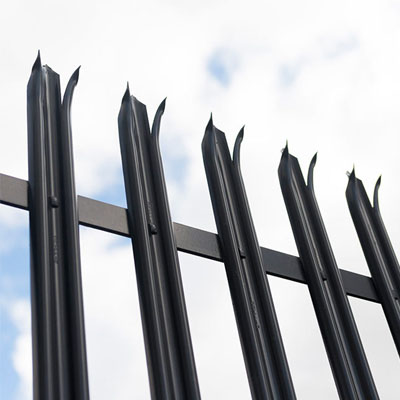
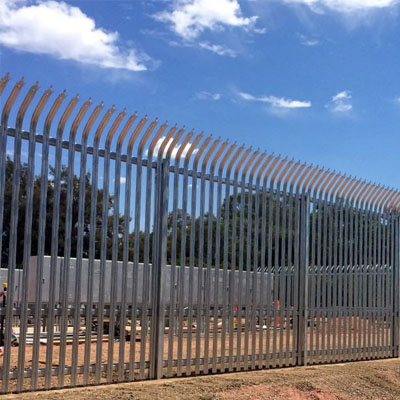
Tall steel palisade fence providing stronger visual deterrent

Typical Palisade Fence Height Ranges and Their Uses

Palisade fencing is commonly manufactured in several standard height ranges, each suited to different levels of exposure and site activity. Matching height to real conditions helps achieve practical security without unnecessary overspecification.

  • Around 1.8 m, suited to low-exposure boundaries and controlled areas where access is already limited.
  • Around 2.1 m, appropriate for most commercial sites that require a clear deterrent and defined perimeter.
  • Around 2.4 m and above, used for restricted or high-value locations where stronger physical and visual deterrence is needed.

Selecting within these ranges allows the fence to respond to site risk rather than applying a single height everywhere. When height aligns with exposure level, the boundary performs more predictably as a security measure.

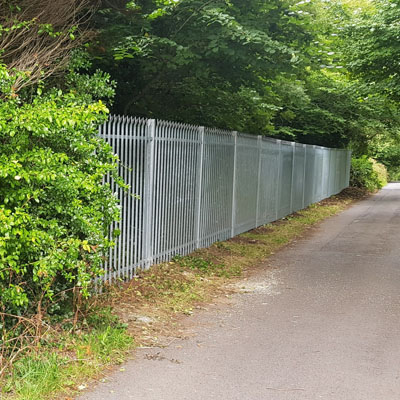
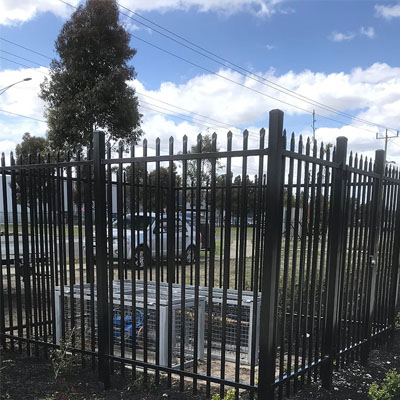
Steel palisade fence installed along public walkway for perimeter security

Site Conditions That Influence Required Height

The surrounding environment plays a direct role in determining how tall a perimeter should be. Boundaries that sit alongside public footpaths, open reserves, or high-traffic areas typically require greater deterrence than fences within private or controlled compounds. Elevation changes can also affect performance, as lower ground levels outside the fence reduce the effective barrier height.

Nearby structures and objects must also be considered. Walls, retaining edges, stored materials, or adjacent equipment can provide unintended climbing assistance if fence height does not account for them. In these situations, increasing height helps maintain the intended barrier function and reduces opportunities for leverage. Matching fence height to the physical layout of the site ensures the perimeter performs consistently along its entire length.

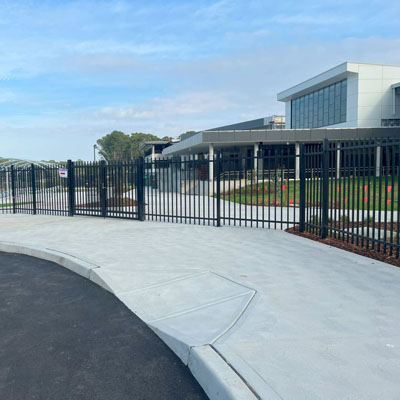
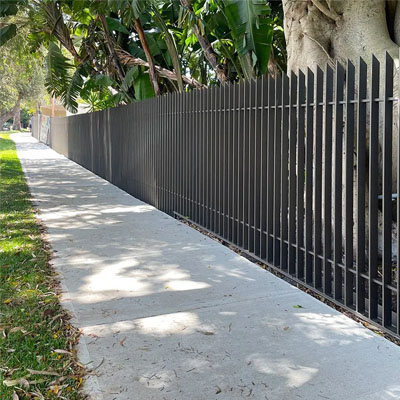
Commercial palisade fencing separating pedestrian path from private property boundary

When Increasing Height Improves Security Outcomes

In some environments, increasing fence height provides a clear improvement in deterrence and boundary control. These situations typically involve greater exposure, higher asset value, or limited supervision where additional effort to climb becomes a significant barrier.

  • High public foot traffic areas, where frequent contact increases the chance of opportunistic access attempts.
  • Isolated or low-visibility locations, where reduced observation raises the value of stronger physical deterrence.
  • Sites with repeated trespass history, where previous attempts indicate a need for greater resistance.
  • Storage of valuable equipment or materials, where longer intrusion time improves the chance of detection or interruption.

In these cases, additional height changes behaviour at the boundary rather than simply adding material. The fence becomes a more credible deterrent and reduces the likelihood of repeated attempts.

Steel palisade security fence installed at appropriate height for commercial site

Situations Where Extra Height Provides Limited Benefit

Increasing fence height does not always deliver a meaningful improvement in security performance. In controlled environments where access is already restricted and monitored, additional height may add cost without significantly changing risk levels. Internal boundaries within secured compounds often rely more on controlled entry points than on deterrence alone.

Continuous surveillance, staffed access points, and controlled vehicle entry can also reduce the need for excessive fence height. Where monitoring systems are active and response times are short, the role of the fence shifts from primary deterrent to structured boundary control. In these cases, selecting an appropriate height rather than the maximum available option supports both practicality and long-term value.

Palisade fencing aligned consistently along industrial property boundary

Integrating Gates and Access Points at Different Heights

Access points need to match the performance of the surrounding fence so the boundary remains consistent along its entire length. Differences in height between gates and panels can create weak points or visual cues that draw attention to entry locations. Careful integration keeps the barrier predictable and reduces opportunities for leverage or climbing assistance.

  • Matching gate height to fence height, preventing obvious lower entry points along the perimeter.
  • Avoiding step points near hinges and latches, where hardware can unintentionally aid climbing.
  • Maintaining clear ground transitions, so gaps or level changes do not reduce effective barrier height.

When gates and fence panels operate as a single system, security behaviour remains consistent across both fixed and moving sections. Proper alignment supports daily use without compromising the purpose of the perimeter.

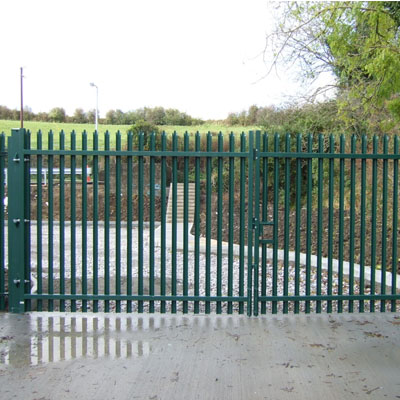
Matching gate and fence height across secure perimeter line

Selecting Fence Height Based on Real Site Risk

We assess each site before recommending a fence height so the perimeter reflects actual exposure rather than a default specification. Access patterns, surrounding activity, stored assets, and visibility are reviewed to determine the level of deterrence required. This approach helps align the barrier with how the property is used day to day.

Installation is planned so height remains consistent across the entire boundary, including gates and transitions. Posts, panels, and access points are set to maintain effective barrier performance without unnecessary oversizing. Matching the fence to site conditions supports reliable security while keeping the system practical to operate.

Selecting the Right Height for Palisade Security Fencing

Talk to Northside Fencing About Palisade Fence Height Selection

Choosing the right fence height helps balance deterrence, practicality, and long-term value. Contact Northside Fencing on (07) 3491 4100 or contact us online to discuss palisade fencing suited to site exposure and operational needs.

FAQ Palisade Security Fencing Height

What is the most common height for palisade fencing?

Around 2.1 m is widely used for commercial sites because it provides a clear deterrent while remaining practical for access and visibility. Final height depends on site exposure and asset value.

Is taller palisade fencing always more secure?

Greater height increases deterrence and climbing difficulty, but the benefit depends on the surrounding environment. In controlled or monitored areas, extreme height may add little additional protection.

Do regulations affect palisade fence height?

Local requirements and site use can influence allowable fence height, particularly near public areas or shared boundaries. Checking applicable rules helps ensure the installation meets expectations.

Can fence height be increased later?

Existing fencing can sometimes be upgraded, though it may require replacing panels, posts, or gates to maintain consistent performance and alignment.

Do gates need to match the height of the fence?

Matching gate height helps maintain barrier effectiveness and avoids creating an obvious entry point along the perimeter.