
Landscaping Changes That Cause Pool Fence Non-Compliance

Pool fences are assessed against measurable safety standards that take surrounding conditions into account. While a barrier may have been compliant at the time of installation, changes around the fence can alter how it performs. Ground levels, fixed structures, and nearby objects all influence whether the barrier continues to meet Queensland pool safety requirements.

Landscaping upgrades are one of the most common reasons a compliant fence later fails inspection. Raising soil levels, adding structures, or installing features close to the barrier can unintentionally reduce effective height or create climbable zones. Because compliance is measured from finished ground level and assessed as a complete system, even minor site changes can affect the way the fence is evaluated.
Raised Garden Beds and Retaining Edges

Raising ground levels beside a pool fence can significantly alter its effective height. Pool barrier measurements are taken from the finished ground level on the outside of the fence. When soil, mulch, or garden edging is built up against the barrier, the measurable height may fall below the required minimum even though the fence itself has not changed.

Retaining edges and built garden borders can also introduce climb assistance. Solid edges positioned close to the fence provide a stable step that reduces the effort required to reach higher points. In these situations, the fence may still appear compliant at a glance, yet the surrounding landscaping alters how it performs during assessment.

Deck Extensions and Paving Works

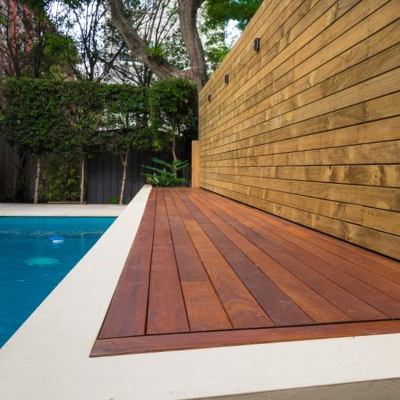
Adding new hard surfaces near a pool fence can change how the barrier is measured and assessed. Even small increases in ground level can reduce the effective height of the fence and affect compliance outcomes.

  • New paving installations, which raise finished ground level and reduce the measurable height of the barrier.
  • Deck extensions positioned close to the fence, creating elevated surfaces that shorten the climb distance.
  • Step-ups or platforms near boundary sections, which alter how inspectors assess the non-climbable zone.
  • Retrofitted patios or slabs, installed after the fence, that change the original ground reference point.

These changes often occur as part of broader outdoor upgrades and may not appear related to pool compliance. Because measurements are taken from the current finished ground level, alterations to paving or decking can affect whether the barrier still meets required standards.

pool fencing landscaping

Outdoor Furniture and Fixed Features

Fixed or semi-permanent features positioned near a pool fence can affect how the barrier performs during inspection. While movable items are generally not assessed as part of the fence, objects that remain in place can create unintended climbing assistance. The non-climbable zone must remain clear of features that reduce the effort required to scale the barrier.

Built seating, storage units, and fixed outdoor installations are common contributors. Items such as integrated benches, barbecue cabinetry, or mounted storage positioned close to the fence can function as stepping points. Even when the fence itself meets height and spacing requirements, nearby structures can alter how easily it can be climbed, which may result in non-compliance during assessment.

Plant Growth and Trellis Installations

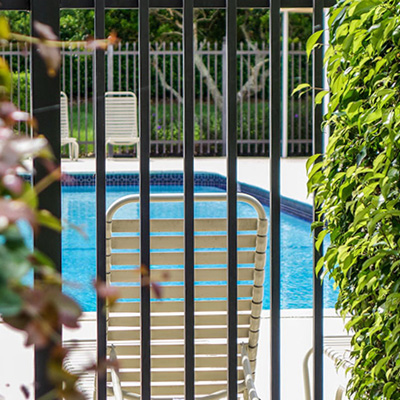
Vegetation near a pool fence can affect compliance as it grows and matures. While small plants may not present an issue initially, dense shrubs or climbing species can change how the barrier performs over time. Inspectors assess whether surrounding growth reduces the effectiveness of the non-climbable zone.

  • Dense hedging positioned close to the fence, which can provide leverage or concealment.
  • Climbing plants attached to the barrier, creating additional grip points.
  • Trellis panels installed beside or against the fence, forming structured climbing support.
  • Overhanging branches from nearby trees, reducing vertical clearance and aiding access.

Regular maintenance helps ensure vegetation does not interfere with barrier performance. Even where the fence structure remains compliant, surrounding plant growth can alter how it is evaluated during a safety inspection.

pool fencing landscaping

Changes to Boundary Fences Used as Pool Barriers

Boundary fences are often used as part of a pool barrier system, particularly where the pool is positioned close to a property line. When landscaping changes occur on either side of that boundary, the way the fence is assessed can change. Measurements are taken from the finished ground level on the non-pool side, which means alterations beyond the pool area can still affect compliance.

Adding fill against the fence, constructing retaining walls, or modifying levels along the boundary can reduce effective height or introduce climbable elements. Even improvements completed on a neighbouring property can influence how the barrier performs during inspection. Where a boundary fence forms part of the pool safety system, any change in surrounding ground conditions should prompt a reassessment to confirm it still meets required standards.

Checking Compliance After Site Changes

Any significant change to ground level, hard surfaces, or fixed structures near a pool fence should prompt a review of compliance. Pool barriers are assessed based on their current environment, not the conditions that existed when the fence was first installed. Even well-intentioned upgrades can alter measurable height or create climbable zones that affect inspection outcomes.

In Queensland, inspections are carried out against the requirements of the Building Act 1975 and AS 1926.1. If landscaping or construction works have been completed around the pool area, confirming that the barrier still meets these standards can help avoid delays when arranging a safety inspection or preparing a property for sale.

pool fencing landscaping

Rectifying Pool Fence Compliance Issues After Landscaping Changes

When landscaping or construction works affect pool fence compliance, adjustments to the barrier may be required to restore performance. This can involve increasing fence height, modifying panels, repositioning gates, or reconfiguring sections where ground levels have changed. The appropriate solution depends on how the surrounding works have altered measurable height or climbability.

Across Brisbane, the Sunshine Coast, and the Moreton Bay region, pool fences are often reassessed following outdoor upgrades or property improvements. Addressing compliance issues promptly helps avoid delays when arranging a pool safety inspection and ensures the barrier continues to function as intended. Corrective work should focus on restoring the required clearances and barrier behaviour rather than applying temporary fixes.

Talk to Northside Fencing About Pool Fence Compliance

If landscaping or construction changes have affected a pool fence, reviewing the barrier before arranging an inspection can help prevent delays. Contact Northside Fencing on (07) 3491 4100 or contact us online to discuss compliance adjustments across Brisbane, the Sunshine Coast, and the Moreton Bay region.

FAQ: Landscaping Changes and Pool Fencing

Can landscaping cause a pool fence to become non-compliant?

Yes. Raising ground levels, installing decks, or placing fixed features near the barrier can reduce effective height or create climbable zones.

Are movable items like chairs assessed during inspection?

Loose furniture is typically not considered part of the barrier, but fixed or semi-permanent structures positioned near the fence can affect compliance.

Do boundary fences need to be reassessed after landscaping?

If ground levels or retaining structures change on the non-pool side, the boundary fence may need reassessment because measurements are taken from finished ground level.

What should be checked after paving or decking works?

The effective fence height, non-climbable zone clearances, and any new step points near the barrier should be reviewed before inspection.

Can a pool fence be modified instead of replaced?

In many cases, height extensions, panel adjustments, or gate modifications can restore compliance without full replacement, depending on the issue.