Fencing for Corner Blocks: Privacy, Safety, and Street Appeal

Corner blocks offer unique street presence, but they also come with challenges that standard lot layouts never face. With two street frontages instead of one, the home is more exposed to passing traffic, pedestrian movement, and nearby intersections. This increases the need for thoughtful fencing choices that balance privacy, safety, and visual appeal without compromising access or compliance. A well-planned design can turn a corner block into a standout property rather than one that feels open or overlooked.

Because the fencing sits so close to public view, every choice becomes more important. Height, materials, layout, and gate positioning all influence how well the fence performs day to day. The right approach considers how the yard is used, where privacy is most important, and how the fence interacts with both streets. With careful planning, corner block fencing can reduce noise, improve security, and elevate kerb appeal while staying functional and compliant with local guidelines.
Why Corner Blocks Are More Challenging to Fence

Corner blocks introduce complexities that standard properties rarely encounter. Exposure on two sides means the home is more visible from multiple angles, so fencing must work harder to provide effective privacy without feeling heavy or closed in. Streets can also sit at different heights relative to the yard, which affects how much of the outdoor space is visible from footpaths and passing vehicles.

Traffic and pedestrian movement add to these challenges. Noise arrives from two directions, and footpaths often run close to the boundary, reducing the sense of separation between public and private space. Driveway placement is also harder to get right on a corner, especially when the entrance must accommodate turning angles or slope changes. All these factors require a more tailored approach to fencing to achieve a balance of privacy, safety, and street appeal.

Fencing for Corner Blocks: Privacy, Safety, and Street Appeal

Design Considerations That Improve Privacy and Security

Corner blocks need fencing that solves two problems at once: creating privacy where the yard feels most exposed and maintaining visibility where safety and access depend on clear sightlines. The goal is to block unwanted views from the street without making the property feel boxed in. A thoughtful layout can protect outdoor living areas, reduce visual intrusion, and strengthen security around the most vulnerable edges of the block.

  • Use height strategically to screen areas where you spend the most time, such as outdoor seating, pool zones, or windows close to the boundary.
  • Blend solid and slatted sections to create privacy without forming a wall-like frontage. Solid panels can protect key areas, while slats maintain openness in lower-sensitivity zones.
  • Position solid panels where traffic is heaviest so you reduce noise and block direct sightlines from passing cars.
  • Angle or offset fence sections to break sightlines around corners and footpaths, improving privacy without altering height.
  • Match the fence layout to entry points so both vehicle and pedestrian gates feel secure and easy to use.
  • Select materials that deter climbing such as vertical slats, flush Colorbond panels, or smooth aluminium surfaces.
Fencing for Corner Blocks: Privacy, Safety, and Street Appeal

Combining these principles gives a corner block the privacy it needs without losing the openness and street appeal that make these properties such a strong feature of suburban neighbourhoods.

Council Sight-Line Rules and Corner Visibility Requirements

Corner blocks come with extra visibility obligations, especially near intersections and where driveways meet the street. Councils often apply a “visibility triangle,” which limits fence height within a defined area so drivers, cyclists, and pedestrians have a clear line of sight. These rules help prevent accidents, but they also influence how much privacy a fence can provide on the street-facing corner.

Height restrictions often apply to the first section of fencing closest to the intersection or driveway exit. This means full-height panels may not be allowed in these zones, even if they are acceptable elsewhere along the boundary. Working within these constraints requires careful planning: taller sections can be used further from the corner, while lower or more open designs maintain compliance where visibility is essential. A balanced approach keeps the property safe, functional, and within local guidelines while still offering meaningful privacy.

Fencing for Corner Blocks: Privacy, Safety, and Street Appeal

Best Materials for Corner Block Fencing

The right materials help a corner block manage privacy, noise, and visibility while keeping the frontage attractive. Because these properties face two streets, the fence is more exposed to weather, passing traffic, and public view, so materials must perform well both structurally and visually. A thoughtful mix of solid panels, screens, and lighter sections can deliver strong privacy without creating a heavy or closed-off appearance.

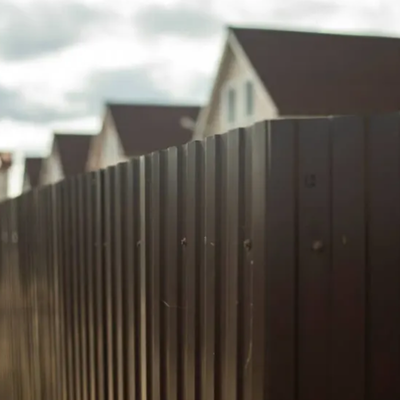
  • Colorbond steel fencing provides full privacy, clean lines, and excellent durability. Its solid profile blocks sightlines and reduces traffic noise, making it ideal for the more exposed sides of a corner block.
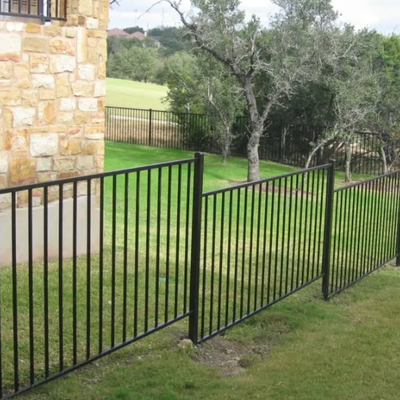
  • Aluminium slat fencing offers a modern look with adjustable spacing, giving you the ability to control visibility while maintaining airflow. They suit areas where a balance of openness and privacy is needed.
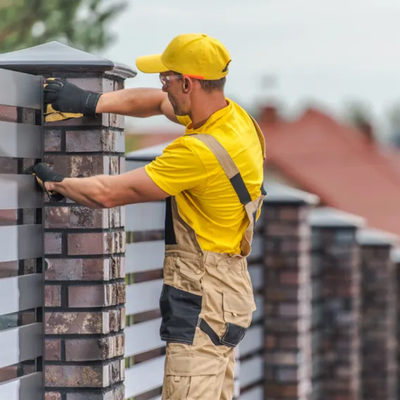
  • Masonry or rendered block sections deliver maximum strength and noise reduction. Short masonry returns at key points can anchor the design and increase security.
  • Hybrid fences combine a solid base with slatted or decorative screening above. This prevents the frontage from feeling too heavy while keeping privacy where it matters most.
  • Decorative aluminium screens add visual interest and soften long boundary lines. They work well on the street-facing side where aesthetics are more prominent.
Fencing for Corner Blocks: Privacy, Safety, and Street Appeal

Choosing the right material mix allows you to tailor the fence to the unique exposure of a corner block, providing privacy where needed and openness where it enhances the overall streetscape.

Smart Gate Placement for Corner Lots

Gate placement is especially important on a corner block because vehicles often approach the driveway at an angle rather than straight on. A well-positioned gate keeps entry smooth and predictable, even when sightlines or turning space are limited. The goal is to place the gate where vehicles can enter and exit without tight manoeuvring or obstructing nearby footpaths.

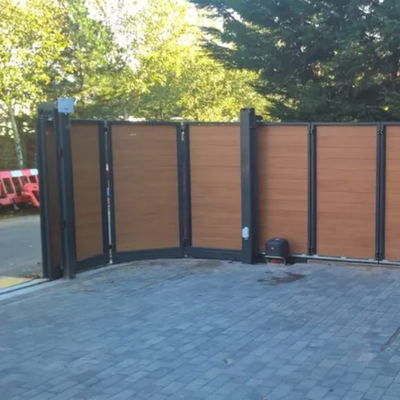
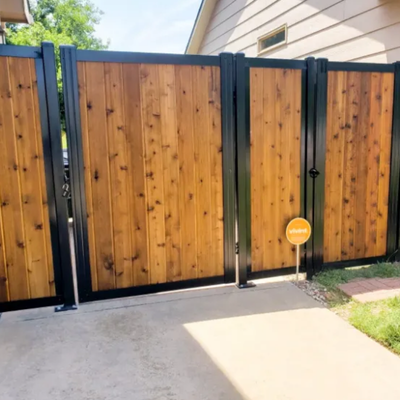
Driveway gates generally work best on the street with the easiest turning angle and the most available space along the boundary. Sliding gates are a strong option on corner blocks because they clear the opening completely without needing space to swing inward. Pedestrian gates can be positioned separately for safer foot access, often near the front entry path rather than the driveway. Thoughtful placement ensures the gate operates reliably, maintains safety, and integrates cleanly with the overall fence design.

Fencing for Corner Blocks: Privacy, Safety, and Street Appeal

Noise and Wind Issues Unique to Corner Blocks

Corner blocks are exposed to sound and wind from two directions, which makes the yard feel more open to traffic and weather. Cars turning at intersections, steady footpath activity, and wind passing unobstructed along both streets can all impact comfort. The right fencing layout reduces these effects without making the frontage feel closed in.

  • Place solid fencing along the louder street to block direct noise and protect outdoor living areas.
  • Use slatted or open panels on the secondary frontage to relieve wind pressure while keeping privacy where it is needed most.
  • Reinforce corner sections or use heavier materials to stabilise long runs and reduce twisting from crosswinds.
  • Include planting inside the fence line for extra noise buffering and a softer look without affecting compliance.

A balanced combination of solid sections, open designs, and strategic reinforcement makes corner blocks quieter, safer, and more comfortable throughout the year.

Fencing for Corner Blocks: Privacy, Safety, and Street Appeal

Create a Corner Block Fence That Works for Your Home

Corner blocks demand more from a fence than standard properties. Privacy, noise control, safety, and street appeal all need to work together, and the best results come from designs that use the right materials in the right places. When the layout is planned carefully, a corner block can feel sheltered and private without losing the openness that makes these homes so appealing.

Northside Fencing designs fencing systems that address the unique challenges of corner lots. We tailor height, materials, layout, and gate placement to suit how you use your yard and how your home meets the street. To organise a measure and quote, call (07) 3491 4100 or get in touch with us online for expert advice.

Frequently Asked Questions About Fencing Corner Blocks

How high can a fence be on a corner block in Queensland?

Height limits vary by council, but many corner blocks must keep fencing lower near intersections to maintain driver visibility. The remaining sections of the boundary can usually be full height. A site check confirms what applies to your property.

Do I need council approval to build a fence on a corner block?

Approval is sometimes required if the fence affects vehicle sightlines, exceeds standard height limits, or sits within a visibility triangle. Most side and rear boundaries remain exempt. Checking early prevents delays.

What fence style gives the best privacy on a corner block?

A combination of solid panels on the most exposed side and slatted designs on the secondary frontage works well. This approach protects outdoor areas while keeping the streetscape open where needed.

How do I reduce traffic noise on a corner property?

Using solid materials such as Colorbond or masonry on the busier frontage helps block direct noise. Pairing this with strategic planting inside the fence line adds a natural layer of sound softening.

Which gate type works best on a corner block?

Sliding gates often suit corner blocks because they keep the driveway clear for angled vehicle entry. Swing gates can work if the driveway is level and has enough room for the gate leaves to open.

Can fencing improve security on a corner block?

Yes. Solid panels help block views into the yard, and taller sections placed correctly reduce access points. Strong frames, smooth surfaces, and well-positioned gates all contribute to better security.